

Choosing how to replace missing teeth can be overwhelming. Let's simplify your options.
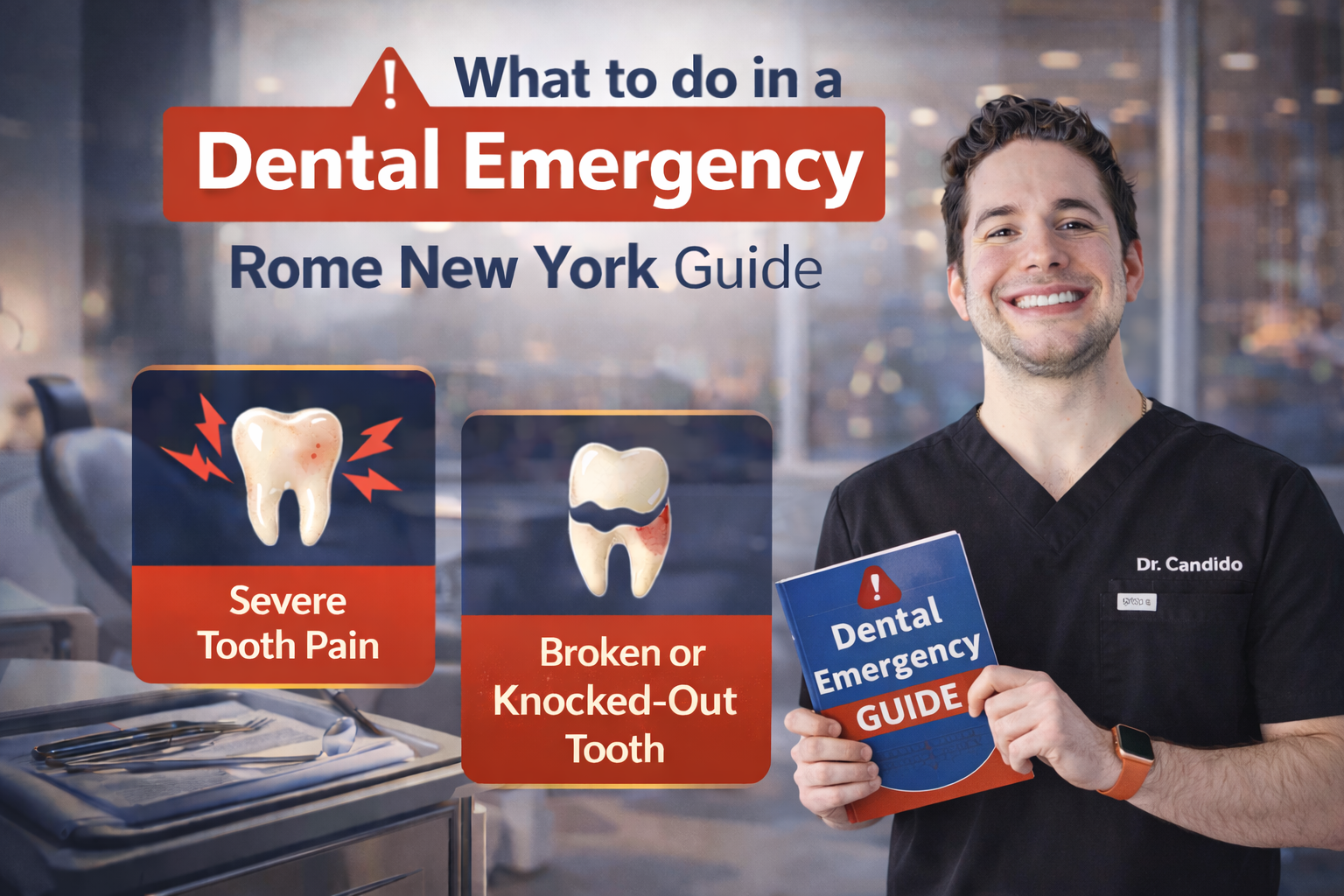
What to Do in a Dental Emergency Dental emergencies never happen at convenient times. A cracked tooth at dinner. A knocked-out tooth at a Saturday soccer game. Pain that wakes you up at 3 AM. Knowing what to do in the first few minutes can make the difference between saving a tooth and losing it. Here's your guide to handling common dental emergencies — plus how Rome Dental can help when you need us most. Knocked-Out Tooth: Act Fast A knocked-out permanent tooth is one of the few true dental emergencies where minutes matter. If you act quickly, the tooth can often be saved. Step 1: Find the tooth immediately. Pick it up by the crown (the white part you see when you smile), never the root. Step 2: Rinse gently if dirty. Don't scrub or remove any tissue fragments attached to the root. Step 3: Try to put it back in the socket. Gently push it in and hold it in place by biting down on a clean cloth. This gives the tooth the best chance of survival. Step 4: If you can't reinsert it, keep it moist. Place the tooth in milk (not water), or tuck it between your cheek and gums. Keeping the root cells alive is critical. Step 5: Get to a dentist within 30-60 minutes. The sooner we can reimplant the tooth, the better your chances of keeping it. Call Rome Dental at (315) 533-5003 immediately. We offer same-day emergency appointments, and we're open seven days a week — including Sundays. Severe Toothache: Finding Relief A toothache that won't quit usually signals an infection, deep cavity, or cracked tooth. Here's what to do while you wait for your appointment: Rinse with warm salt water. Mix half a teaspoon of salt in 8 ounces of water. This can help reduce inflammation and kill some bacteria. Take over-the-counter pain relief. Ibuprofen (Advil, Motrin) works better than acetaminophen for dental pain because it reduces inflammation. Apply a cold compress. Hold an ice pack against your cheek for 20 minutes on, 20 minutes off. This helps with swelling and numbs the area. Don't put aspirin directly on your gums. This is an old folk remedy that can actually burn your gum tissue. What you shouldn't do: Ignore it and hope it goes away. Dental infections don't resolve on their own, and they can spread to other parts of your body if left untreated. Cracked or Chipped Tooth: Assess the Damage Not every crack is an emergency, but some require immediate attention. Call us right away if: You can see a deep crack, the tooth is loose, you're in significant pain, or there's bleeding that won't stop. It can probably wait a day or two if: It's a small chip with no pain, there's no sensitivity to hot or cold, and the tooth feels stable. In the meantime, avoid chewing on that side. If there's a sharp edge bothering your tongue or cheek, cover it with dental wax or even sugarless gum until you can see us. Lost Filling or Crown: Temporary Fixes A lost filling or crown isn't usually an emergency, but you should see a dentist within a few days to prevent further damage. If you lose a filling: You can temporarily fill the hole with sugarless gum or over-the-counter dental cement from a pharmacy. Avoid chewing on that side. If your crown falls off: If possible, try to slip it back over the tooth — this protects the exposed tooth from sensitivity and damage. Use denture adhesive or toothpaste to hold it temporarily. Don't use regular glue. Bring the crown with you to your appointment. We can often reattach it or create a new one quickly. When to Go to the ER Instead Most dental problems should be treated by a dentist, not an emergency room. The ER can give you pain medication and antibiotics, but they can't fix the underlying dental issue. However, go to the ER if: You have severe swelling that's spreading to your eye or neck, you're having difficulty breathing or swallowing, you have a high fever with dental pain, or you've experienced significant facial trauma. These symptoms can indicate a spreading infection that needs immediate medical attention. Why Seven-Day Availability Matters Rome Dental is open seven days a week — including Saturdays and Sundays — because dental emergencies don't check your calendar first. Our hours: Monday through Thursday, 8 AM to 5 PM. Friday through Saturday, 9 AM to 3 PM. Sunday, 9 AM to 12 PM. We offer same-day and next-day appointments for dental emergencies. You won't have to wait in pain for days until a Monday appointment opens up. Whether you're a current patient or you've never been to our office before, we'll see you. If you're in pain, call (315) 533-5003 . Frequently Asked Questions Should I go to urgent care for a dental emergency? A dentist is usually a better choice than urgent care for dental problems. Urgent care centers typically don't have dental equipment and can only prescribe medication — they can't actually fix the problem. Call us first. How much does emergency dental care cost? Emergency exams are included in our membership plan. For non-members, emergency exam fees are similar to regular exam fees. The total cost depends on what treatment you need. We'll always explain costs before starting treatment. Can I wait until Monday if my tooth hurts on Saturday? You don't have to. We're open on Saturdays and Sundays for exactly this reason. There's no need to spend the weekend in pain. Have a dental emergency? Call Rome Dental at (315) 533-5003. We're here when you need us or you can simply click here !

Regular dental checkups catch small problems before they become expensive ones. Learn why routine visits matter — even when nothing hurts. Rome Dental, open 7 days.